
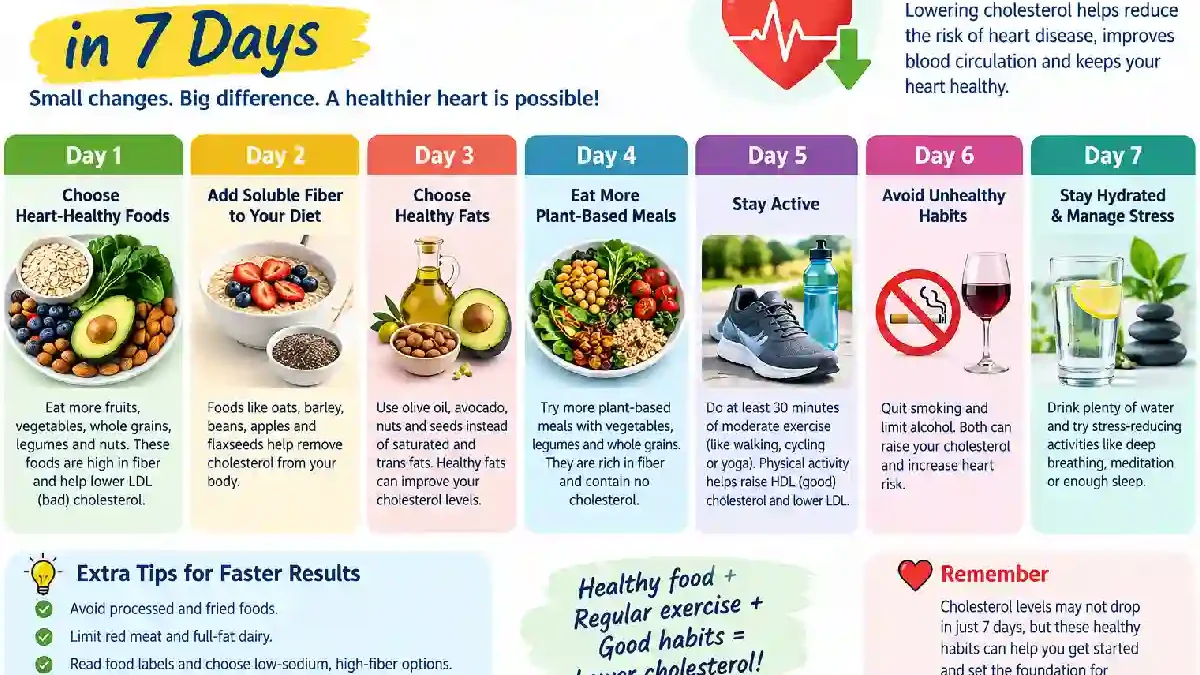
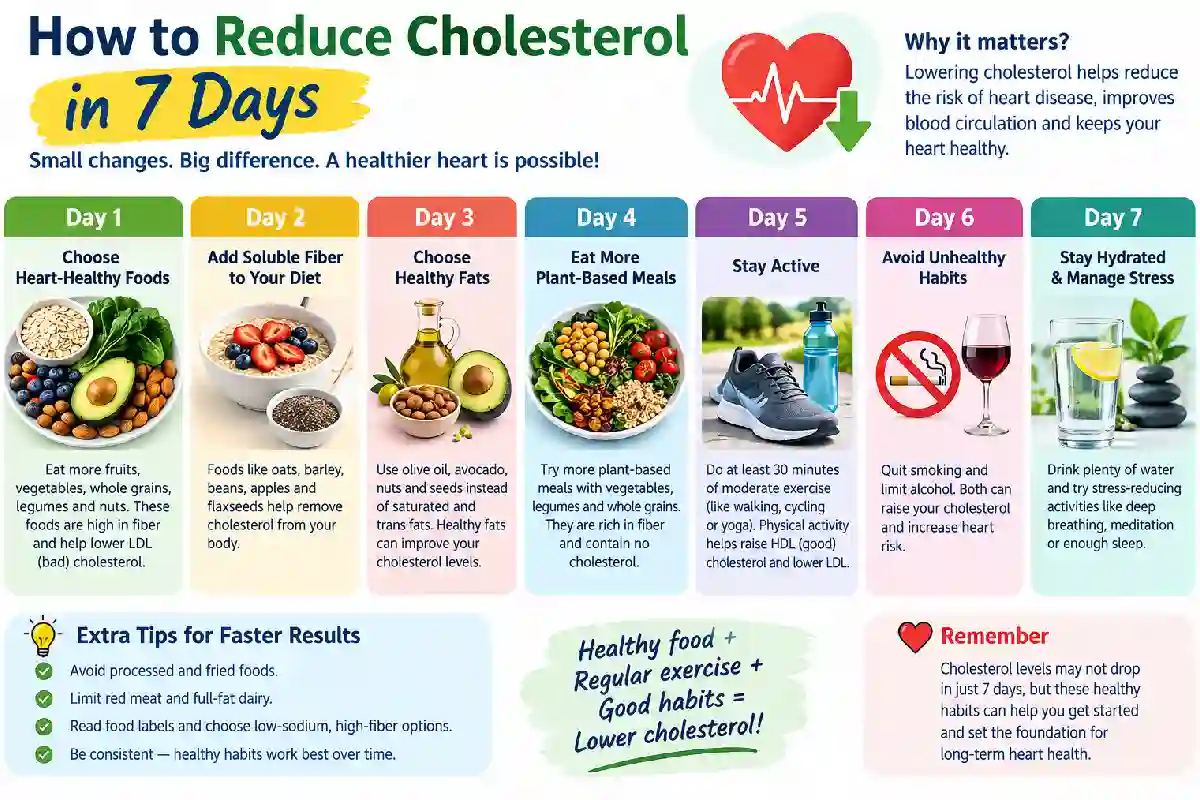
If you have been diagnosed with high cholesterol levels lately, you may want to find out how to reduce cholesterol in 7 days.
One must understand that it is extremely difficult to see any significant changes in cholesterol within just one week. It all depends on the chosen approach, but it usually takes some weeks.
However, a period of 7 days is quite enough to make initial changes in your lifestyle to help you lower your bad cholesterol, or LDL cholesterol, and improve your heart condition.
You should do the following:
- Limit the intake of saturated fat
- Eat foods rich in soluble fiber
- Use unsaturated fats
- Maintain a regular exercise routine
- Maintain a healthy weight
- Stop smoking
- Use cholesterol-lowering medicines as needed
Table of Contents
Can You Really Lower Cholesterol in 7 Days?
You could start changing your behaviors regarding cholesterol right away; however, one week is not sufficient time for significant changes in blood test results.
Cholesterol depends on:
- Diet
- Physical exercise
- Body weight
- Genetic makeup
- Some diseases
- Drug treatments
Some people might react faster to diet adjustments than others.
What Is Cholesterol?
It is a waxy substance that your body requires to perform normal body functions.
LDL Cholesterol
LDL is known as “bad” cholesterol since its higher level leads to an increase in plaque within the arteries.
HDL Cholesterol
On the other hand, HDL is known as “good” cholesterol since it aids in removing cholesterol from the arteries.
Triglycerides
Another fat in the blood is triglycerides.
An increased level of triglycerides in the blood together with either increased LDL or decreased HDL may lead to cardiovascular disease.
7-Day Cholesterol-Lowering Plan
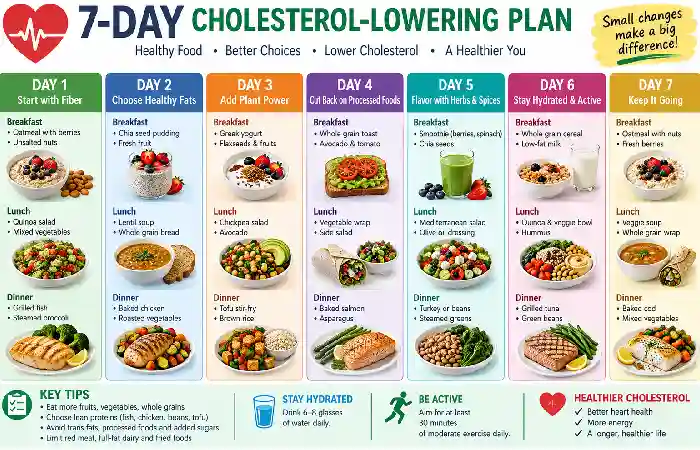
Below is a plan of activities that various health organizations recommend.
Day 1: Lower Saturated Fat
Reducing saturated fat is one of the best changes you need to make to lower the level of LDL cholesterol.
Common food products rich in saturated fat include:
According to the CDC, it is essential to limit the intake of foods high in saturated and trans fat in managing your cholesterol.
Better Choices
The 2026 AHA dietary guidance advises people to consume unsaturated fats instead of saturated fats.
- Olive oil
- Avocado
- Nuts
- Seeds
- Fish
Day 2: Add Soluble Fiber
They have a tendency to form a gel-like substance in the body that reduces cholesterol absorption.
The sources include:
- Oats
- Barley
- Beans
- Lentils
- Apples
- Citrus fruits
- Carrots
- Psyllium
The NHLBI suggests an increase in soluble fiber as a dietary change in order to lower cholesterol.
Breakfast Idea
One should try:
- Oatmeal
- Fruit
- Nuts
- Low-fat yogurt
Day 3: Eat More Fruits and Vegetables
One can consider taking vegetables or fruits in almost all meals.
Fruits and vegetables recommended include:
- Apples
- Berries
- Oranges
- Spinach
- Broccoli
- Carrots
- Tomatoes
The American Heart Association suggests consumption of a lot of fruits and vegetables as part of a healthy diet.
Increasing Intake of Produce
One can:
- Consume fruits at breakfast.
- Take vegetables in sandwiches.
- Consume salads during lunch.
- Eat two vegetables during dinner.
- Consider eating fruits rather than desserts.
Day 4: Increase Physical Activity
Physical exercise might prove to be useful in managing cholesterol.
Such exercises could consist of:
- Decrease in LDL levels
- Increase in HDL levels
- Lower triglyceride levels
- Maintaining a healthy weight
- Maintaining good blood pressure
CDC recommends that adults get 150 minutes of moderate exercise each week, and the NHLBI advises physical exercise as one of the major elements of the treatment of high cholesterol.
Begin With Walking
If you are not physically active, begin with:
- Walking energetically for 20-30 minutes
- Cycling
- Swimming
- Dancing
You do not necessarily need to perform all exercises every week.
Day 5: Choose Better Proteins
There are sources of protein that have high saturated fat.
Instead of eating fatty meat regularly, choose:
- Beans
- Lentils
- Fish
- Skinless poultry
- Tofu
- Low-fat milk
Day 6: Reduce Highly Processed Foods
Ultra-processed foods may have high levels of:
- Saturated fats
- Additives and sugar
- Salt
- Refined carbohydrates
Examples include:
- Packaged snacks
- Fast food
- Processed meat
- Confectioneries
- Desserts
The 2026 dietary recommendation by the American Heart Association suggests eating unprocessed foods as much as possible in comparison to the consumption of ultra-processed foods.
Instead, pay attention to:
- Grains
- Vegetables
- Fruits
- Legumes
- Meat
- Nuts
- Seeds
Day 7: Create a Habit
The final day will help you transform the week’s positive changes into daily habits.
Check what was successful for you.
Question yourself:
- Have I eaten enough fiber?
- Have I cut down on saturated fat?
- Have I exercised?
- Have I consumed more fruits and vegetables?
- Have I eaten less fast food?
- Have I taken my medications regularly?
Foods That May Help Lower LDL Cholesterol
Oats
Oats have soluble fiber content and help reduce cholesterol absorption.
Beans and Lentils
Beans and lentils have soluble fiber and plant protein.
They include:
- Kidney beans
- Chickpeas
- Black beans
- Lentils
Nuts
Nuts have unsaturated fats and many other nutrients.
They include:
- Almonds
- Walnuts
- Pistachios
The unsalted kind of the nuts mentioned above should be taken.
Avocado
Avocados have unsaturated fats.
It can substitute for butter, cheese, or other foods rich in saturated fats.
Olive Oil
It is an excellent source of unsaturated fats.
Olive oil substitutes for butter and other types of fat.
Fish
Eating fish provides heart-healthy proteins.
It includes:
- Salmon
- Sardines
- Trout
Whole Grains
Include:
- Oats
- Barley
- Brown rice
- Whole grain bread
Whole grains have higher fiber content as compared to refined grains.
Foods to Limit for Lower Cholesterol
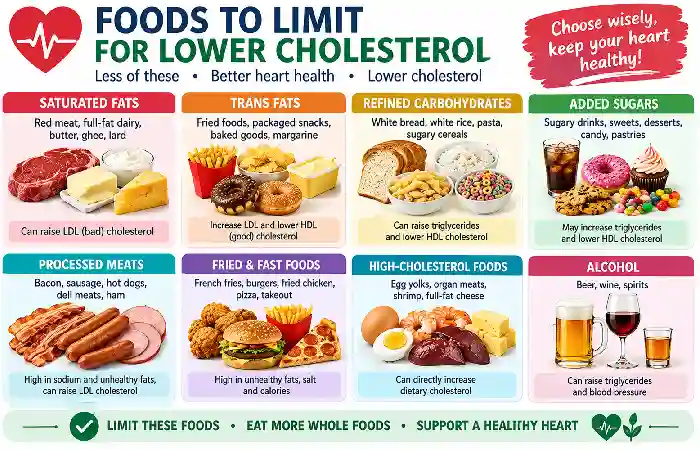
Try reducing:
- Fatty meats
- Bacon
- Sausage
- Butter
- Cream
- Full-fat cheese
- Fried foods
- Processed snacks
- Commercial baked goods.
What About Plant Sterols and Stanols?
Plant sterols and stanols can also help lower cholesterol absorption.
These may be available in foods like:
- Whole grains
- Nuts
- Legumes
- Plant oils
Some of the foods that have plant sterols/stanols added to them:
A Simplified Meal Plan for 7 Days
Breakfast
Choose one:
- Oatmeal with berries
- Whole grain bread with avocado
- Low-fat yogurt with fruit and nuts
Lunch
Choose one:
- Lentil soup with whole-grain bread
- Bean salad
- Grilled chicken and veggies sandwich
Dinner
Choose one:
- Grilled fish with veggies
- Lentil curry with brown rice
- Skinless chicken with salad and whole grains
Snacks
Choose:
- Fruits
- Nuts
- Carrots
- Low-fat yogurt
Beverages
Drink:
- Water
- Tea without sugar
Avoid:
- Sugary beverages
7-Day Cholesterol Checklist
For the coming week, try your best to:
- Eat oats, beans, or other foods rich in soluble fiber every day.
- Eat less butter, high-fat meats, and high-fat dairy products.
- Eat vegetables in your lunch and dinner.
- Eat fruits as snacks.
- Eat unsaturated fats such as olive oil.
- Exercise almost every day.
- Do not smoke tobacco.
- Take all prescribed medications.
- Drink water and not any sweetened beverage.
When Do You Need To Get Rechecked For Your Cholesterol?
Do not wait a week to have an accurate result for your cholesterol test.
It is common for healthcare professionals to allow some extra time before repeating the blood test.
This is dependent on:
- Cholesterol level
- Heart disease risk
- Medications
- Other diseases
Final Thoughts
However, if you want to lower cholesterol in 7 days, then the key point is to build good habits and not look for any miracles in such a short period.
In 7 days:
- Limit the intake of saturated fat.
- Increase the consumption of soluble fiber.
- Consume fruits and vegetables.
- Consume whole grains.
- Use unsaturated fats in place of saturated fats.
- Exercise regularly.
- Lose weight.
- Do not smoke.
- Take prescribed medicines.
7 days are sufficient for changing your behavior, but lowering cholesterol levels should take more time.