


In today’s fast-paced and highly social world, having a charismatic personality can significantly impact your personal and professional life. Whether you are leading a team, building relationships, or growing your social presence, charisma plays a crucial role in how people perceive and respond to you.
But what exactly makes someone charismatic? Is it something people are born with, or can it be developed over time?
Research in Psychology and human behavior confirms that charisma is not just an inborn quality. It is a set of learnable traits and habits that anyone can cultivate with consistent effort.
This in-depth guide explores the most important charismatic personality traits, supported by insights, examples, tables, and practical strategies to help you become more influential and engaging.
Table of Contents
What Is a Charismatic Personality?
A charismatic personality refers to an individual’s ability to attract, influence, and inspire others through a combination of confidence, communication skills, emotional intelligence, and authenticity.
Charisma is often described as the blend of:
- Warmth (how friendly and approachable you are)
- Competence (how capable and confident you appear)
When these two elements come together, they create a powerful presence that draws people in naturally.
Core Charismatic Personality Traits
Below are the most essential traits that define charismatic individuals.
1. Confidence Without Arrogance
Confidence is the foundation of charisma. People who are confident tend to:
- Speak clearly and assertively
- Maintain eye contact
- Carry themselves with strong posture
However, true charisma lies in balancing confidence with humility. Overconfidence or arrogance can repel people instead of attracting them.
2. Strong Communication Skills
Charismatic individuals are excellent communicators. They:
- Express ideas clearly
- Use engaging storytelling
- Adjust their tone based on the audience
Good communication is not just about speaking; it is about making others understand and feel connected.
3. Active Listening
One of the most underrated traits of charismatic people is their ability to listen.
They:
- Give full attention during conversations
- Avoid interrupting others
- Respond thoughtfully
Active listening makes others feel valued and respected, which strengthens relationships.
4. Empathy and Emotional Intelligence
Empathy allows individuals to understand and relate to others’ emotions.
Closely tied to this is Emotional Intelligence, which helps charismatic people:
- Recognize emotional cues
- Respond appropriately
- Build deeper connections
5. Positive Energy and Optimism
Charismatic individuals tend to radiate positivity. They:
- Encourage others
- Stay optimistic during challenges
- Create a motivating environment
Positive energy is contagious and makes people naturally gravitate toward you.
6. Self-Awareness
Self-awareness is the ability to understand your own thoughts, behaviors, and emotions.
It helps in:
- Recognizing strengths and weaknesses
- Improving interactions
- Adapting to different social situations
7. Authenticity
Authenticity is one of the strongest pillars of charisma.
Charismatic people:
- Stay true to their values
- Express genuine emotions
- Avoid pretending to be someone else
People are more likely to trust and connect with someone who is real and honest.
8. Body Language and Presence
Non-verbal communication plays a huge role in charisma.
Effective body language includes:
- Maintaining eye contact
- Using open gestures
- Standing or sitting with confidence
A strong presence can often communicate more than words.
9. Sense of Humor
Humor helps break barriers and create instant connections.
Charismatic individuals:
- Use humor to lighten situations
- Make conversations enjoyable
- Avoid offensive or forced jokes
10. Leadership and Vision
Many charismatic individuals naturally become leaders.
They:
- Inspire and motivate others
- Communicate a clear vision
- Encourage teamwork and collaboration
Table: Key Charismatic Traits and Their Impact
| Trait | Description | Impact |
| Confidence | Belief in self | Builds trust and authority |
| Communication | Clear and engaging speech | Influences others |
| Listening | Paying full attention | Strengthens relationships |
| Empathy | Understanding emotions | Builds emotional connection |
| Optimism | Positive outlook | Inspires others |
| Authenticity | Being genuine | Creates trust |
| Body Language | Non-verbal cues | Enhances presence |
| Humor | Playful interaction | Makes you likable |
| Self-awareness | Knowing yourself | Improves behavior |
| Leadership | Inspiring others | Drives influence |
Distribution of Charisma Factors
A breakdown of the most influential elements of charisma:
- Communication Skills – 25%
- Emotional Intelligence – 20%
- Confidence – 20%
- Body Language – 15%
- Authenticity – 10%
- Humor and Positivity – 10%
Insight: Communication and emotional intelligence together contribute nearly half of overall charisma.
Real-Life Examples of Charismatic Traits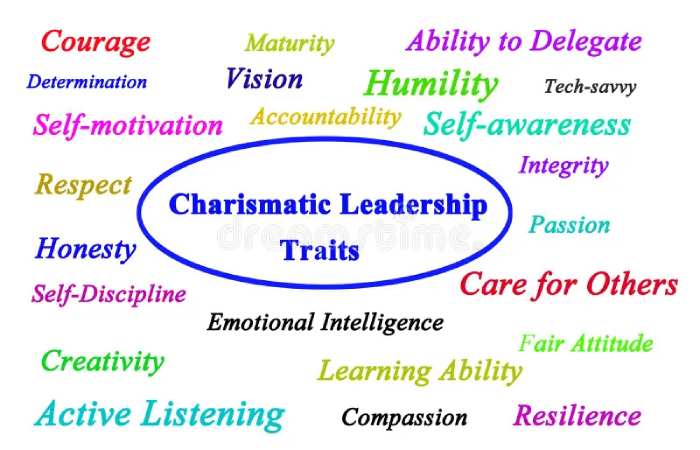
Workplace Leader
- Actively listens to team members
- Encourages participation
- Clearly communicates goals
Social Influencer
- Uses storytelling and humor
- Connects emotionally with the audience
- Maintains authenticity
Teacher or Mentor
- Shows empathy toward learners
- Motivates and inspires
- Builds a supportive environment
Advanced Charismatic Traits
Emotional Control
Charismatic individuals:
- Stay calm under pressure
- Handle conflicts gracefully
- Avoid emotional outbursts
Humility
They:
- Respect others regardless of status
- Accept feedback
- Avoid showing superiority
Recognition of Others
Charismatic people:
- Appreciate contributions
- Celebrate achievements
- Encourage growth
Storytelling Ability
Storytelling enhances charisma by:
- Making communication memorable
- Creating emotional engagement
- Simplifying complex ideas
Table: Charismatic vs Non-Charismatic Behavior
| Behavior | Charismatic Person | Non-Charismatic Person |
| Communication | Engaging and clear | Monotone or unclear |
| Listening | Active and focused | Distracted |
| Confidence | Calm and assured | Nervous or arrogant |
| Energy | Positive and uplifting | Negative or dull |
| Interaction | Inclusive | Self-centered |
How to Develop Charismatic Personality Traits
Step-by-Step Approach
- Improve Communication Skills
- Practice speaking clearly
- Learn storytelling techniques
- Enhance Body Language
- Maintain eye contact
- Use confident posture
- Build Confidence
- Take small social risks
- Practice self-affirmation
- Develop Emotional Intelligence
- Observe emotions in others
- Practice empathy in daily interactions
- Stay Present
- Focus fully on conversations
- Avoid distractions
Daily Habits to Build Charisma
- Talk to new people regularly
- Practice active listening
- Maintain good posture
- Smile naturally
- Reflect on daily interactions
Common Myths About Charisma
Myth 1: Charisma Is Inborn
Reality: Charisma can be learned and improved with practice.
Myth 2: Only Extroverts Are Charismatic
Reality: Introverts can be highly charismatic through listening and presence.
Myth 3: Appearance Defines Charisma
Reality: Behavior and attitude matter far more than looks.
Benefits of a Charismatic Personality
- Improved career opportunities
- Stronger personal relationships
- Greater influence and persuasion
- Better leadership abilities
- Increased confidence
Practical Exercises to Improve Charisma
Mirror Practice
Practice speaking and maintaining natural expressions in front of a mirror.
Storytelling Exercise
Share one story daily focusing on clarity and emotion.
Listening Practice
Engage in conversations where your main goal is to listen without interrupting.
Final Thoughts
Charisma is not a mysterious or rare quality. It is a combination of learnable skills that anyone can develop.
By focusing on:
- Confidence
- Communication
- Emotional intelligence
- Authenticity
You can build a personality that naturally attracts and influences others.
Consistency is the key. Small improvements practiced daily will lead to noticeable changes over time, helping you become more engaging, influential, and memorable in every aspect of life.