
Table of Contents
Introduction
Healthy hair is often associated with good grooming and overall well-being. However, everyday exposure to pollution, heat styling tools, chemical treatments, and harsh weather conditions can cause significant damage to hair. Dryness, frizz, breakage, and dullness are common problems faced by many people today.
Hair masks have become an essential solution for restoring hair health. Unlike regular conditioners, hair masks provide deep nourishment and intensive repair that can significantly improve hair texture and strength. If you are wondering what the best hair masks are and how they can transform your hair care routine, this comprehensive guide will help you understand everything you need to know.
This article explores the benefits of hair masks, top products in the market, important ingredients, price comparisons, and tips for choosing the best mask for your hair type.
What Is a Hair Mask?
A hair mask is a deep-conditioning treatment designed to repair and nourish hair from within. While conditioners typically work on the outer layer of the hair shaft, hair masks contain concentrated ingredients that penetrate deeper into the hair structure.
Hair masks are usually applied once or twice a week and left on the hair for a longer period, typically between 10 and 30 minutes. This allows the nutrients and moisturizing ingredients to work effectively.
Key Benefits of Hair Masks
It offer several advantages for maintaining healthy hair:
- Deep hydration for dry and brittle hair
- Repair of damaged hair strands
- Reduction of frizz and split ends
- Increased shine and softness
- Strengthening of weak hair fibers
- Protection against environmental damage
Most high-quality it contain ingredients such as keratin, natural oils, vitamins, amino acids, and plant extracts that improve overall hair health.
Why Hair Masks Are Important for Hair Care
Many people rely only on shampoo and conditioner in their hair care routine. However, these products are not always sufficient to repair deeply damaged hair.
Hair masks work as intensive treatments that restore lost moisture and nutrients.
Major Reasons to Use Hair Masks
- Repair Hair Damage
Hair can become damaged due to:
- Heat styling tools such as straighteners and curling irons
- Hair coloring and bleaching
- Chemical treatments like perming or rebonding
Hair masks help rebuild damaged strands and restore strength.
- Restore Moisture
Dry hair lacks proper hydration. Hair masks provide essential moisture that prevents brittleness and breakage.
- Improve Hair Texture
Regular use of hair masks can make hair smoother, shinier, and easier to manage.
Best Hair Masks in 2026
There are many hair masks available in the market today. Some are budget-friendly while others are premium salon-quality products. Below is a researched list of popular hair masks known for their effectiveness.
Top Hair Masks Comparison Table
| Hair Mask | Best For | Key Ingredients | Approx Price | Quantity |
| Wella Professionals Invigo Nutri-Enrich Mask | Dry and dull hair | Goji berry, vitamins | ₹549 – ₹1,076 | 150 ml |
| Love Beauty and Planet Argan Oil Mask | Frizz control | Argan oil, lavender | ₹300 – ₹540 | 200 ml |
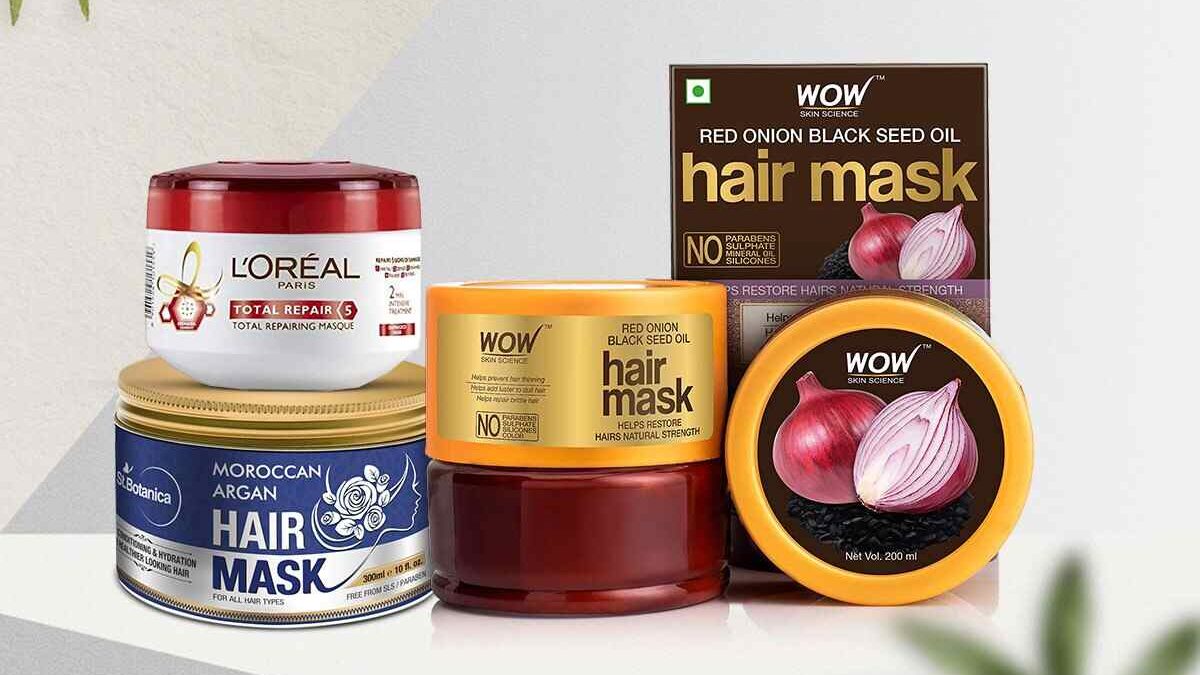
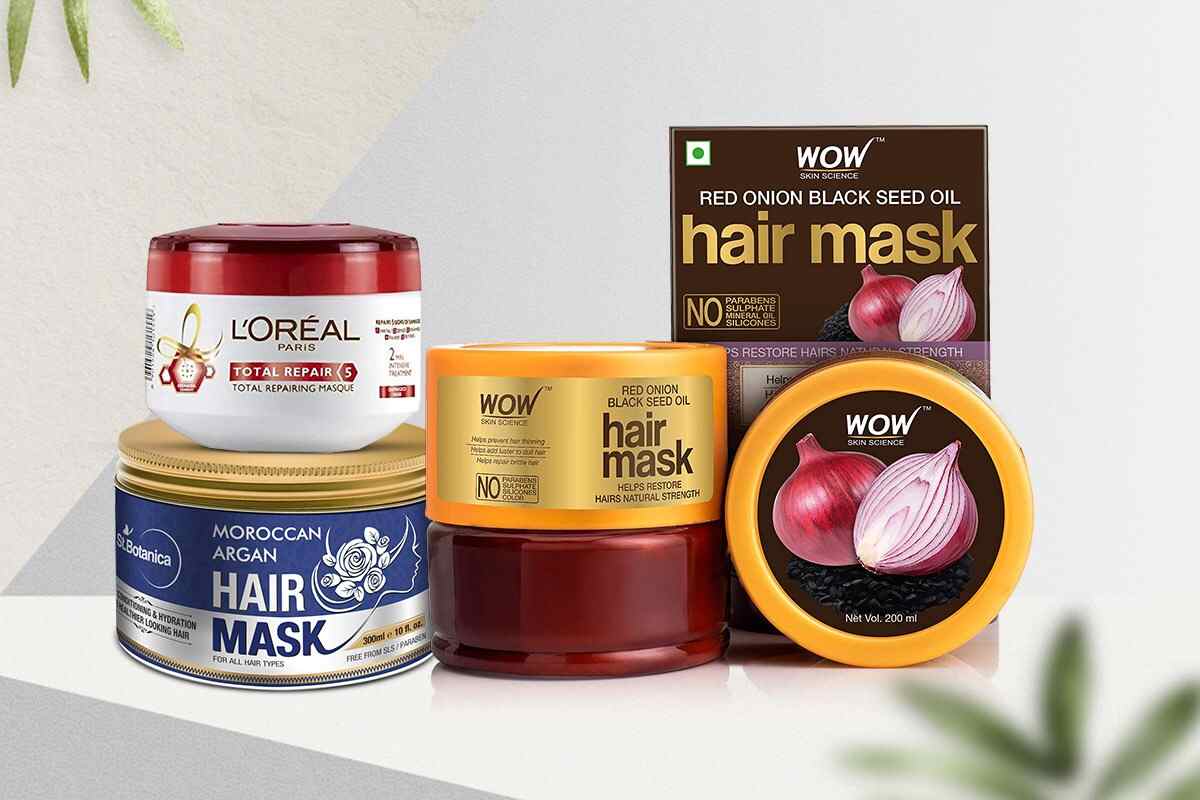
| L’Oréal Paris Total Repair 5 Mask | Damaged hair | Pro-keratin, ceramide | ₹324 – ₹499 | 200 ml |
| Pilgrim Argan Oil Hair Mask | Smoothness | Argan oil, camellia | ₹650– ₹1300 | 200 ml |
| Moroccanoil Intense Hydrating Mask | Deep hydration | Argan oil | ₹3200 – ₹3600 | 250 ml |
| Minimalist Bond Repair Mask | Bond repair | Ceramides, amino acids | ₹604 – ₹750 | 200 g |
These products are widely recommended by hair experts because they provide deep hydration, repair damage, and improve hair texture.
Hair Mask Price Comparison
Masks are available in different price ranges depending on brand reputation, ingredients, and formulation technology.
Hair Mask Price Segments
| Category | Price Range | Example Brands |
| Budget | ₹300 – ₹700 | L’Oréal, Pilgrim |
| Mid-range | ₹700 – ₹1500 | Wella, Minimalist |
| Premium | ₹1500 – ₹3500+ | Moroccanoil, salon brands |
Estimated Market Distribution
- Budget Hair Masks: 45%
- Mid-Range Hair Masks: 35%
- Premium Hair Masks: 20%
Budget hair masks dominate the market because they provide effective results at affordable prices.
Important Ingredients in the Best Hair Masks
The quality of a hair mask depends largely on the ingredients used in its formulation.
Hydrating Ingredients
| Ingredient | Benefits |
| Aloe Vera | Provides hydration and soothes the scalp |
| Hyaluronic Acid | Retains moisture in hair strands |
| Coconut Oil | Prevents protein loss |
| Shea Butter | Deeply conditions and softens hair |
These ingredients are ideal for people with dry or frizzy hair.
Repairing Ingredients
| Ingredient | Benefits |
| Keratin | Repairs damaged hair structure |
| Collagen | Improves hair elasticity |
| Amino Acids | Strengthen hair strands |
| Biotin | Supports stronger hair growth |
It with these ingredients are especially helpful for chemically treated or heat-damaged hair.
Natural Oils Used in Hair Masks
| Oil | Benefits |
| Argan Oil | Adds shine and reduces frizz |
| Jojoba Oil | Nourishes scalp and hair |
| Olive Oil | Provides deep conditioning |
| Almond Oil | Strengthens and smooths hair |
Natural oils create a protective barrier that locks moisture inside the hair shaft.
Types of Hair Masks
Different hair concerns require different types of hair masks.
1. Hydrating Hair Masks
These masks are designed for people with dry or frizzy hair.
Common ingredients include:
- Shea butter
- Coconut oil
- Aloe vera
Hydrating masks help restore moisture and improve hair softness.
2. Repair Hair Masks
Repair masks are ideal for damaged hair caused by styling tools or chemical treatments.
Common ingredients:
- Keratin
- Protein complexes
- Amino acids
These masks rebuild hair structure and reduce breakage.
3. Color Protection Hair Masks
Color protection are specially formulated treatments designed to preserve the vibrancy of colored or bleached hair while providing deep nourishment. Hair coloring processes such as bleaching, highlighting, or dyeing can weaken the hair structure, making strands more porous and prone to dryness, breakage, and fading. Color protection hair masks address these issues by restoring moisture, strengthening the hair shaft, and sealing the cuticle to lock in color pigments.
Using a color protection mask regularly helps maintain salon-quality color for longer periods and protects hair from environmental damage such as sun exposure, pollution, and heat styling.
4. Scalp Treatment Hair Masks
Some masks focus on improving scalp health.
They are helpful for:
- Dandruff
- Oily scalp
- Weak hair roots
A healthy scalp plays a crucial role in maintaining healthy hair growth.
DIY Hair Masks vs Store-Bought Hair Masks
Both natural and commercial hair masks can be beneficial depending on your needs.
DIY Hair Masks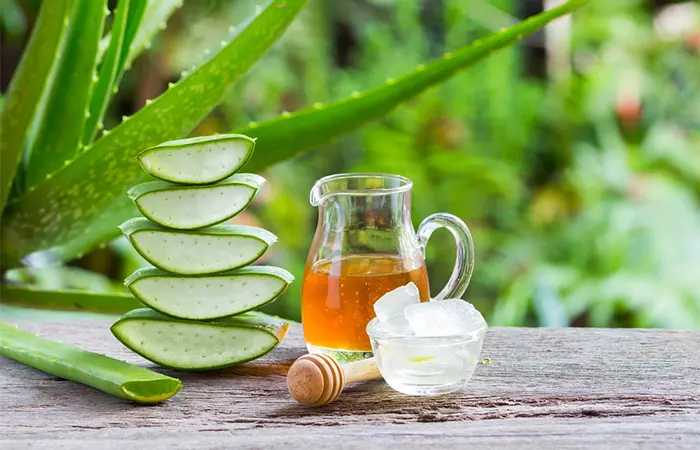
Common ingredients include:
- Eggs
- Yogurt
- Coconut oil
- Honey
- Banana
Advantages
- Natural ingredients
- Affordable
- Easy to prepare at home
Disadvantages
- Short shelf life
- Less scientifically formulated
Store-Bought Hair Masks
Advantages
- Scientifically formulated
- Target specific hair problems
- Long shelf life
Disadvantages
- Can be expensive
- May contain synthetic ingredients
Best Hair Masks for Different Hair Types
Choosing the right hair mask depends on your hair type.
Best Hair Masks for Dry Hair
Look for ingredients such as:
- Shea butter
- Argan oil
- Coconut oil
These ingredients provide intense hydration and reduce dryness.
Best Hair Masks for Curly Hair
Curly hair tends to be more prone to dryness and frizz.
Recommended ingredients include:
- Avocado oil
- Shea butter
- Glycerin
These ingredients help define curls and improve moisture retention.
Best Hair Masks for Damaged Hair
Damaged hair requires repairing ingredients.
Look for masks that contain:
- Keratin
- Collagen
- Amino acids
These ingredients rebuild the hair structure and reduce breakage.
Best Hair Masks for Fine Hair
Fine hair requires lightweight formulas.
Good ingredients include:
- Aloe vera
- Lightweight botanical oils
Heavy masks can weigh fine hair down and reduce volume.
How to Use a Hair Mask Properly
Using a hair mask correctly ensures maximum results.
Step-by-Step Guide
- Wash your hair with a gentle shampoo.
- Remove excess water from hair using a towel.
- Apply the hair mask from mid-length to the ends.
- Leave the mask on for 10–20 minutes.
- Rinse thoroughly with lukewarm water.
For deeper conditioning, you can wrap your hair with a warm towel while the mask is applied.
Common Hair Mask Mistakes to Avoid
Many people use hair masks incorrectly, which reduces their effectiveness.
Avoid These Mistakes
- Applying too much product
- Using it on dirty hair
- Leaving the mask on for too long
- Using protein masks too frequently
Excessive protein treatments can sometimes make hair stiff or brittle.
Weekly Hair Care Routine with Hair Masks
Maintaining a simple routine can improve hair health significantly.
| Day | Hair Care Routine |
| Monday | Shampoo and conditioner |
| Wednesday | Apply leave-in conditioner |
| Friday | Use hair mask treatment |
| Sunday | Oil massage for scalp nourishment |
Consistency in hair care is the key to achieving long-term results.
Natural Hair Mask Recipes
Natural hair masks can also be effective for improving hair health.
Coconut Oil and Honey Hair Mask
Ingredients:
- 2 tablespoons coconut oil
- 1 tablespoon honey
Benefits:
- Deep hydration
- Improved shine
- Reduced dryness
Egg and Yogurt Hair Mask
Ingredients:
- 1 egg
- 2 tablespoons yogurt
Benefits:
- Provides protein repair
- Strengthens hair strands
Banana Hair Mask
Ingredients:
- 1 ripe banana
- 1 tablespoon olive oil
Benefits:
- Softens hair
- Improves elasticity
How Often Should You Use Hair Masks?
The frequency of using it depends on hair condition.
| Hair Type | Recommended Frequency |
| Dry hair | Two times per week |
| Normal hair | Once per week |
| Oily hair | Once every two weeks |
| Damaged hair | Two to three times per week |
Regular treatments can significantly improve hair strength and texture.
Hair Mask Trends in the Beauty Industry
The hair care industry has evolved significantly over the last decade. Consumers are increasingly focusing on ingredient quality and long-term hair health.
Popular Trends
- Natural and organic hair masks
- Sulfate-free formulations
- Vegan hair care products
- Bond repair technology
- Salon-quality treatments at home
Many brands are now developing products that combine scientific research with natural ingredients to provide better results.
Final Thoughts
It are one of the most effective treatments for improving hair health. They provide deep nourishment, repair damage, and restore moisture that regular conditioners cannot offer.
The best it was typically contain a combination of hydrating ingredients, strengthening proteins, and natural oils that work together to improve hair texture and shine.
Whether you choose budget-friendly products, premium salon treatments, or natural DIY masks, using it regularly can significantly transform your hair care routine and help you achieve healthier, stronger, and more beautiful hair over time.