
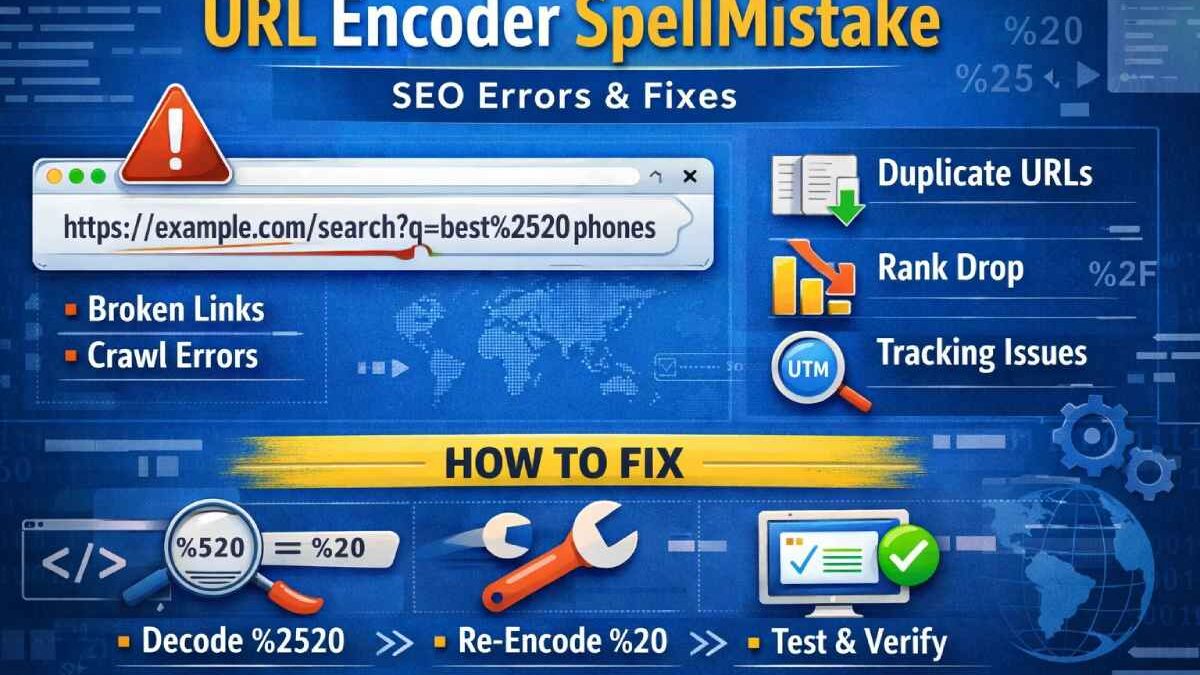

In today’s digital-first world, URLs are not just web addresses they are the backbone of how users, search engines, and applications interact online. Whether you’re a developer, blogger, or digital marketer in the USA, even a small mistake in URL encoding can break links, ruin campaigns, and damage your SEO performance.
That’s where the concept of “URL encoder spellmistake” becomes important.
If you’ve ever faced broken links, incorrect redirects, or weird-looking URLs with %20, %3F, or %26, this guide will help you understand everything—from basics to advanced fixes.
Table of Contents
What is URL Encoding?
URL encoding, also known as percent encoding, is the process of converting unsafe characters into a format that can be safely transmitted over the internet.
For example:
| Original Character | Encoded Version |
| Space | %20 |
| ! | %21 |
| & | %26 |
| # | %23 |
This ensures that browsers and servers interpret URLs correctly without confusion.
Example:
- Original URL:
https://example.com/search?q=hello world - Encoded URL:
https://example.com/search?q=hello%20world
Without encoding, the URL might break or return incorrect results.
What Does “URL Encoder SpellMistake” Mean?
The term URL encoder spellmistake USA refers to errors that occur when URLs are encoded incorrectly due to:
- Typing mistakes
- Incorrect encoding format
- Partial or double encoding
- Misuse of tools
These mistakes can cause:
- Broken links
- Incorrect page loading
- Failed API requests
- SEO issues
As highlighted by experts, even a small encoding error can “break a link or change its meaning entirely.”
Why URL Encoding is Critical for SEO in the USA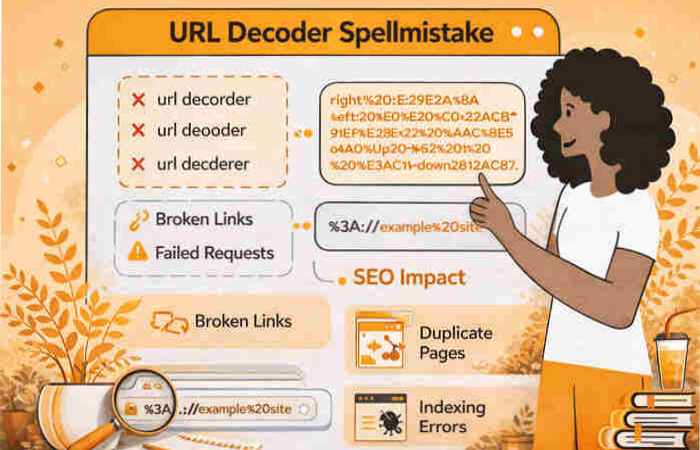
Search engines like Google rely heavily on clean, readable, and structured URLs. Improper encoding can negatively impact:
- Crawlability
Search engines may fail to understand incorrectly encoded URLs.
- Indexing
Pages with broken URLs might not get indexed properly.
- User Experience
Users clicking broken links often leave immediately, increasing bounce rate.
- Ranking Signals
Clean URLs contribute to better SEO performance and visibility.
Common URL Encoder SpellMistakes
Here are the most frequent mistakes seen by developers and marketers in the USA:
1. Manual Encoding Errors
Typing encoded values manually often leads to mistakes.
Example:
| Correct | Incorrect |
| hello%20world | hello%2world |
2. Partial Encoding
Only part of the URL is encoded, causing inconsistency.
3. Double Encoding
Encoding an already encoded URL.
| Step | Output |
| Original | hello world |
| Encoded once | hello%20world |
| Encoded twice | hello%2520world |
4. Incorrect Hex Values
Using wrong hexadecimal values leads to invalid URLs.
5. Copy-Paste Issues
Hidden characters from documents can corrupt URLs.
Real-World Scenario (USA Marketing Example)
Imagine a digital marketing agency in the USA launching an email campaign:
- Campaign URL includes:
summer sale & discount - Incorrect encoding:
Only spaces encoded → %20
Ampersand (&) left unencoded
Result:
- Analytics tools misinterpret parameters
- Campaign tracking fails
- Loss of valuable data
This is a classic URL encoder spellmistake problem.
URL Encoding vs URL Decoding
Understanding the difference is essential:
| Feature | Encoding | Decoding |
| Purpose | Convert text → safe URL format | Convert URL → readable text |
| Example | Space → %20 | %20 → Space |
| Use Case | Sending data | Reading data |
Top Benefits of Using a URL Encoder Tool
Using tools instead of manual encoding offers major advantages:
Key Benefits:
- Eliminates human errors
- Ensures correct formatting
- Saves time
- Improves SEO performance
- Handles complex characters automatically
Tools like SpellMistake simplify encoding and decoding in seconds.
How URL Encoding Works (Step-by-Step)
Step 1: Identify Unsafe Characters
Characters like spaces, symbols, and non-ASCII text are flagged.
Step 2: Convert to Hexadecimal
Each character is replaced with % + hexadecimal value.
Step 3: Replace in URL
The encoded string is inserted into the URL.
URL Encoding Character Table
Here’s a useful reference:
| Character | Meaning | Encoded |
| Space | Blank | %20 |
| ! | Exclamation | %21 |
| @ | At symbol | %40 |
| & | Ampersand | %26 |
| / | Slash | %2F |
| ? | Question mark | %3F |
Best Practices to Avoid URL Encoder SpellMistakes
- Always Use Reliable Tools
Avoid manual encoding whenever possible.
- Encode Entire URL Strings
Partial encoding leads to inconsistencies.
- Avoid Double Encoding
Check if the URL is already encoded.
- Validate URLs Before Publishing
Test links before going live.
- Keep URLs Clean and Simple
Avoid unnecessary parameters.
SEO-Friendly URL Structure Tips
To improve rankings and usability:
- Use hyphens instead of spaces
- Keep URLs short
- Include keywords
- Avoid special characters
- Use lowercase letters
USA Market Insight: Why This Matters More Than Ever
In the USA, where digital competition is intense:
- Businesses rely heavily on analytics
- Marketing campaigns depend on accurate URLs
- SEO plays a crucial role in traffic generation
A single encoding mistake can:
- Break ad campaigns
- Distort tracking data
- Reduce ROI
Tools Comparison Table (Free vs Paid URL Encoders)
| Feature | Free Tools | Paid Tools |
| Cost | $0 | $10–$50/month |
| Accuracy | High | Very High |
| Bulk Encoding | Limited | Available |
| API Integration | Rare | Common |
| SEO Features | Basic | Advanced |
When Should You Use URL Encoding?
You should encode URLs when:
- Creating query parameters
- Sending data via forms
- Working with APIs
- Handling special characters
- Managing multilingual URLs
Advanced Tips for Developers
- Use Built-in Functions
- JavaScript: encodeURIComponent()
- Python: urllib.parse.quote()
- Automate Encoding
Integrate encoding into your workflow to avoid manual errors.
- Validate with Testing Tools
Always test URLs in browsers and APIs.
Common Myths About URL Encoding
Myth 1: Encoding is Optional
Reality: It’s essential for proper functionality.
Myth 2: Only Developers Need It
Reality: Marketers and SEO experts also rely on it.
Myth 3: Google Ignores Encoding Errors
Reality: Poor URLs can hurt rankings.
Future of URL Encoding in SEO
As search engines evolve:
- Clean URLs will become even more important
- AI-driven tools will automate encoding
- SEO tools will integrate encoding checks
Final Thoughts
The keyword “url encoder spellmistake USA” may sound technical, but its impact is very real especially in a competitive digital environment.
To summarize:
- URL encoding ensures safe and accurate data transmission
- Small mistakes can cause big SEO and usability issues
- Using proper tools eliminates errors
- Clean URLs improve rankings and user experience
If you want to grow your website traffic and maintain a strong online presence, mastering URL encoding is no longer optional it’s essential.