
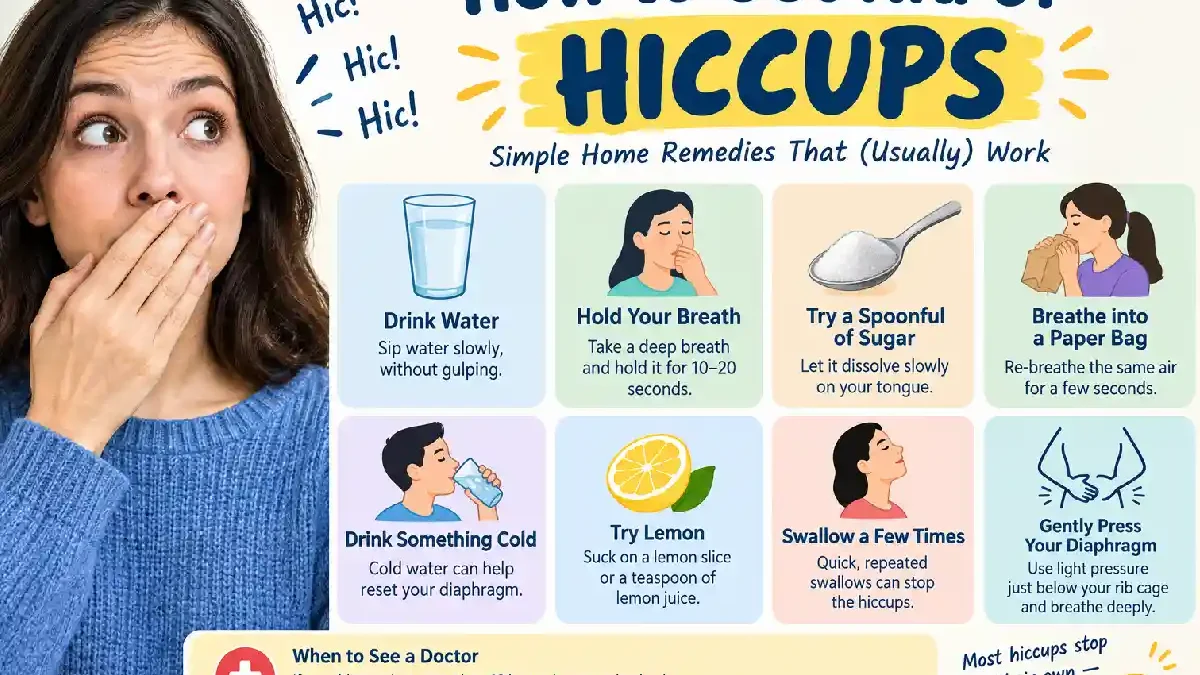
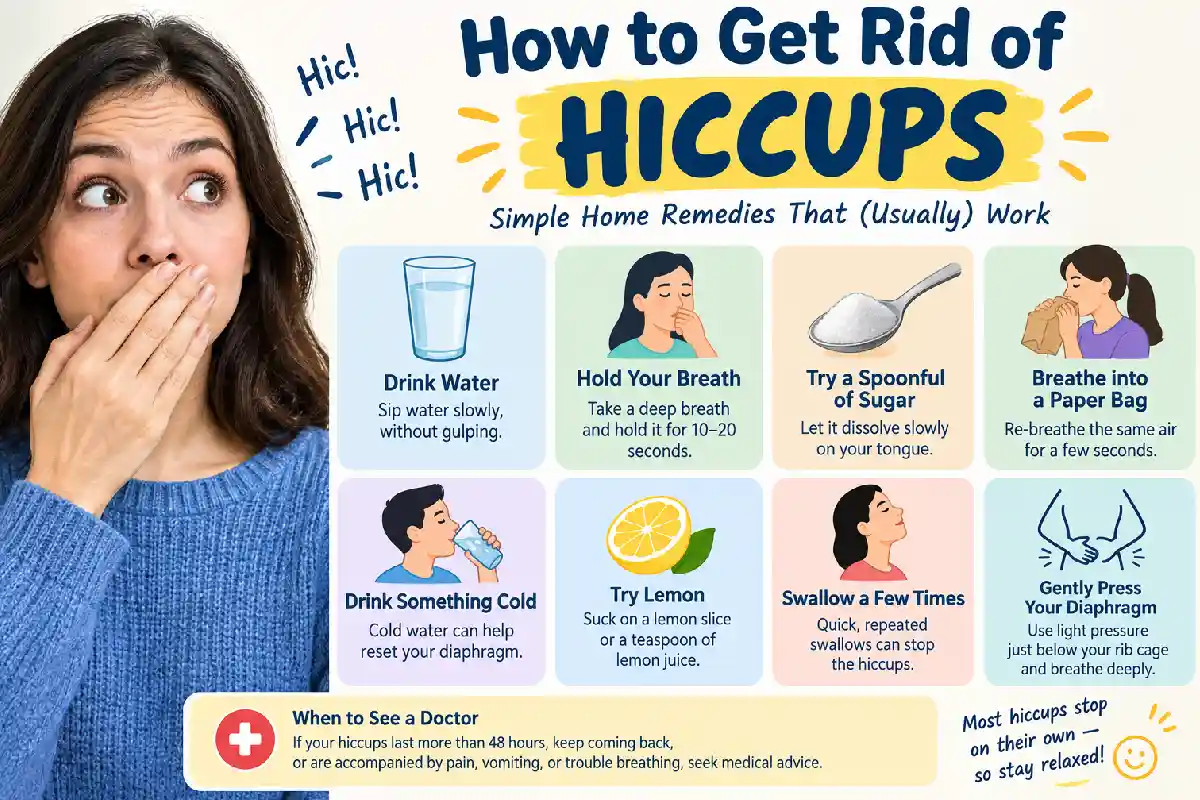
Hiccups are annoying, unpredictable, and can sometimes be tough to treat. Many people have had hiccups in their lifetime. Hiccups are caused by eating rapidly, drinking fizzy drinks, and swallowing excess air.
However, hiccups do not last for more than a few minutes and go away by themselves. However, if you want them to stop sooner, then there are some home remedies that may be useful.
Some of these remedies include breath-holding, drinking cold water, gargling with icy water, and changing the breathing pattern. It is worth mentioning that these home remedies are not effective for all people, and many remedies for hiccups have minimal scientific backing.
This article explains everything about the cure for hiccups, including their causes, reasons for having hiccups, remedies, and situations where hiccups require medical intervention.
Table of Contents
What Are Hiccups?
A hiccup is the situation when a person has an involuntary contraction of their diaphragm. The diaphragm is a very crucial breathing muscle separating the chest from the stomach.
Just after the sudden contraction of the diaphragm, the vocal cords suddenly close, leading to a sound referred to as a hiccup. Hiccups come and go spontaneously.
How to Get Rid of Hiccups Quickly
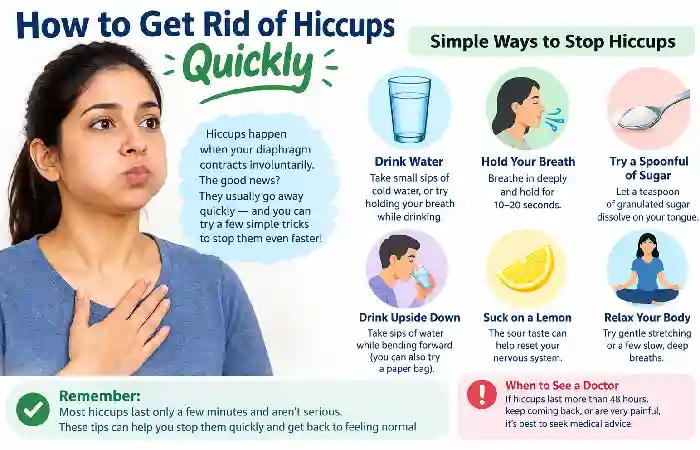
Below are some methods that have been recommended to interrupt the hiccup reflex.
1. Holding Your Breath for a Short Period of Time
Holding your breath is one of the most common methods.
Method:
- Take a deep breath normally.
- Hold for a few seconds.
- Exhale slowly.
- Repeat the process once or twice if necessary.
It might interrupt the pattern of breathing and stop the repeated spasms of your diaphragm.
Do not hold your breath for too long to the point where you cannot tolerate it.
2. Sipping Cold Water Slowly
Consuming cold water is another common remedy.
Sip cold water slowly.
Some people believe that the change in sensation will help interrupt the reflex.
Both Mayo Clinic and Cleveland Clinic have included sipping cold water on the list of the most common home remedies.
Do not consume water quickly since taking in too much air may cause hiccups.
3. Gargling with Ice Water
Gargling with cold or ice water may also help some people.
It may stimulate the back of the throat and interrupt the hiccups.
Gargle slowly for a few seconds.
Do not swallow the water while gargling.
4. Pull Your Knees Toward Your Chest
Take a comfortable posture and gently draw your knees toward your chest by bending forward.
This procedure could cause some pressure on your diaphragm.
According to Cleveland Clinic, bringing your knees toward your chest is among the methods that may be used to temporarily stop hiccups.
Do not do it if you feel any form of discomfort.
5. Try Slow and Controlled Breathing
Sometimes hiccups occur due to stress and excitement.
Deep breathing is one way of relaxing and changing the breathing process.
Try doing the following:
- Slow breathing
- Pause for a few seconds
- Slow breathing out
- Repeat the process several times
It is safe and easy.
6. Consume Some Granulated Sugar
Consumption of small amounts of granulated sugar is among the ways that may stop hiccups.
One could take the sugar and allow it to dissolve on their tongue before swallowing.
It is common but cannot assure success.
People with diabetes should give the matter serious consideration.
7. Take a Bite of Lemon
The sour taste might stimulate the nerves that trigger hiccups.
Some people opt for:
- Taking a small bite of lemon
- Taking a small amount of lemon juice
8. Drink Ice-Cold Water
Instead of consuming cold water, other individuals like to consume ice water.
Consume in smaller amounts rather than gulping the whole portion.
According to Cleveland Clinic, cold water has the ability to irritate nerves responsible for causing hiccups.
9. Breathing into a Paper Bag
Another home remedy that is commonly regarded as a cure for temporary hiccups is breathing into a paper bag.
Safety measures:
- You can breathe only into a paper bag.
- Breathing into a plastic bag is strictly prohibited.
- Do not cover your head with a paper bag.
- You should stop right away if you feel dizzy or uncomfortable.
Breathing into a paper bag is also known as one of the cures for temporary hiccups at Mayo Clinic, NHS, and Cleveland Clinic; yet, this approach is not always effective.
10. Patience and Time Will Help You
Sometimes, all you need is patience and time.
Temporary hiccups usually take several minutes and then disappear on their own.
If one technique fails to work, do not worry. Calm down and relax your breathing.
Why Do Hiccups Happen?
At other times, the reason for hiccups may not be known.
Some common causes of hiccups are given below.
Eating Fast
If you eat fast, you tend to take in more air.
It affects the diaphragm and causes hiccups.
Eating Too Much
Eating excessive amounts of food causes stomach distention, leading to hiccups.
Drinking Carbonated Drinks
The consumption of carbonated drinks contributes to gases present in the stomach.
Ingesting Excessive Amounts of Air
Chewing gum, smoking, and eating fast contribute to the amount of air taken in.
Temperature Changes
Sudden temperature changes will cause hiccups in some people.
Emotions
Excitement and emotions can cause hiccups.
Prevention of Hiccups
Although it may not be easy to always avoid attacks of hiccups, here are ways that can help reduce the triggers.
Eating Slowly
Avoid rushing with your meals.
Ensure you chew your meals thoroughly.
Eating Small Meals
Taking large meals may lead to hiccups in some people.
It is better to take small meals.
Avoiding Carbonated Drinks
Carbonated drinks cause excess gas to enter your stomach.
This causes your stomach to distend.
Identify Your Triggers
All people are different.
Watch what happens before hiccups start.
Some common triggers may include:
- Some foods
- Drinks with bubbles
- Oversized meals
- Stress
- Fast eating
Popular Hiccups Cures: Do They Work?
Many well-known ways of treating hiccups rely on personal experience rather than science.
They include such ways as:
- Breathing holding
- Water drinking
- Gargling
- Sugar eating
- Lemon biting
- Knees lifting
It might help sometimes but doesn’t help others.
Doctors say that most cases of hiccups usually go away without medical treatment, regardless of whether you use any remedy.
What to Avoid
Never use any cure for hiccups that could potentially harm you.
Here are several of them:
Do Not Hold Your Breath for a Long Time
A minute of holding your breath is OK, but never hold your breath if you start feeling uncomfortable and dizzy.
Do Not Use a Plastic Bag
If you use the paper-bag technique, avoid using a plastic one.
Do Not Drink Water Rapidly
Never drink water too rapidly, as it could cause choking.
Avoid “Scare” Cures
There is no need to scare anyone.
Do not use any techniques that might hurt you.
How Long Do Hiccups Usually Last?
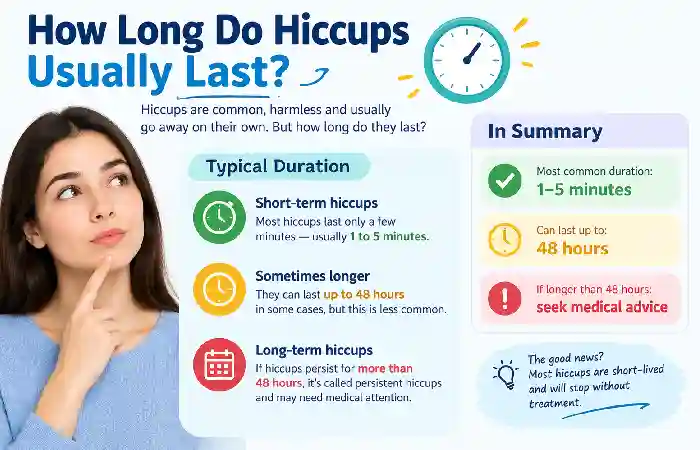
The majority of hiccups are temporary.
They are generally resolved within minutes.
Hiccups are generally classified depending on how long they last:
- Temporary hiccups: These last for seconds or minutes.
- Persistent hiccups: These last for more than 48 hours.
- Intractable hiccups: These last longer than this period.
Persistent hiccups require medical attention because they may be due to an existing issue or certain medication.
When Should I Consult a Doctor For My Hiccups?
One is required to visit a doctor for their hiccups if:
- They persist beyond 48 hours.
- They are recurring.
- They prevent one from eating.
- They disturb one’s sleep.
- They hinder breathing.
- They hamper carrying out daily activities.
Persistent hiccups can be due to an existing illness or even certain medications.
What Causes Persistent Hiccups?
However, in some instances, persistent hiccups might be caused by certain factors.
Such factors include:
- Gastrointestinal issues
- Irritation of the nerves causing the reflex
- Nervous system issues
- Metabolic disorders
- Medications
- Lung conditions
These factors do not necessarily point to a serious underlying disease.
Can a Doctor Treat Persistent Hiccups?
Yes.
In cases where the hiccups keep occurring, it is crucial to determine the reason behind the hiccups.
The process may vary depending on the patient, but it will mostly depend on the following things:
- History of the person
- The medication being used by the individual
- The symptoms
- Surgical operations done recently
The process undertaken will be geared towards solving the main problem.
In most cases, drugs have been known to act as a solution to the problems of hiccups.
Conclusion
Therefore, if you are looking for ways to stop hiccups, start with the simplest and non-harmful methods. For instance, you can use cold water, holding your breath, gargling cold water, and breathing regulation.
Remember that there is no cure that will work for everyone, and ordinary hiccups are natural and pass within several minutes.
You can prevent your hiccups in the future by eating more slowly, taking smaller amounts of food, and avoiding such triggers as sparkling drinks and eating fast.
The most important thing about hiccups is paying attention to those which are persistent. In case your hiccups are frequent and affect your ability to eat, sleep, and breathe normally, visit the doctor.