


Body language shapes 93% of first impressions, turning average folks into magnetic forces. Master these cues to project charisma effortlessly.
Body language is one of the most powerful and often underestimated tools for building charisma. Research in psychology and communication consistently shows that nonverbal cues can influence how people perceive your confidence, trustworthiness, and presence even more than your words.
Here’s a detailed, science-backed guide to mastering body language so you can naturally command attention and connect with any audience.
Table of Contents
Why Body Language Drives Charisma
Nonverbals convey warmth (smiles, leans) and power (posture, gestures), blending for 82% likability boost per Princeton studies. Mirror neurons sync emotions, while poses tweak hormones.
Essential Posture and Stance Tips
Stand tall shoulders back boosts testosterone 20%, per Amy Cuddy. Avoid slouch; it tanks confidence.
12 Powerful Body Language Cues
1. Master the Power of Posture
Your posture is the foundation of your presence.
What science says:
Studies on “power posing” suggest that open, upright posture can increase feelings of confidence and reduce stress.
How to apply:
- Stand or sit with your shoulders relaxed and back
- Keep your spine straight (not stiff)
- Avoid slouching or shrinking your body
Why it works:
An open posture signals confidence, competence, and approachability.
2. Use Eye Contact Strategically
Eye contact is one of the strongest indicators of charisma.
What science says:
Balanced eye contact builds trust and emotional connection, while too little or too much can feel uncomfortable.
How to apply:
- Maintain eye contact for 3–5 seconds at a time
- Use the “triangle technique” (left eye → right eye → mouth)
- Break eye contact naturally, not abruptly
Why it works:
It shows attentiveness, sincerity, and confidence.
3. Smile Genuinely (The Duchenne Smile)
Not all smiles are equal.
What science says:
A genuine smile activates both mouth and eye muscles, making it more authentic and engaging.
How to apply:
- Let your eyes slightly crinkle
- Avoid forced or constant smiling
- Smile when it feels natural, especially when greeting
Why it works:
People subconsciously detect authenticity and respond positively to it.
4. Control Your Hand Gestures
Your hands can either amplify or weaken your message.
What science says:
Speakers who use purposeful gestures are perceived as more persuasive and engaging.
How to apply:
- Keep hands visible (don’t hide them in pockets)
- Use gestures to emphasize key points
- Avoid repetitive or nervous movements
Why it works:
Gestures add clarity and energy to your communication.
5. Slow Down Your Movements
Fast, jerky movements often signal anxiety.
What science says:
Slow, deliberate movements are associated with confidence and authority.
How to apply:
- Walk slightly slower than average
- Pause before responding
- Move your hands smoothly
Why it works:
Calm movement signals control and self-assurance.
6. Mirror Others Subtly
Mirroring is a powerful social bonding tool.
What science says:
People tend to like others who subtly mimic their behavior.
How to apply:
- Match posture or gestures subtly
- Sync tone and speaking pace
- Avoid obvious copying
Why it works:
It creates unconscious rapport and connection.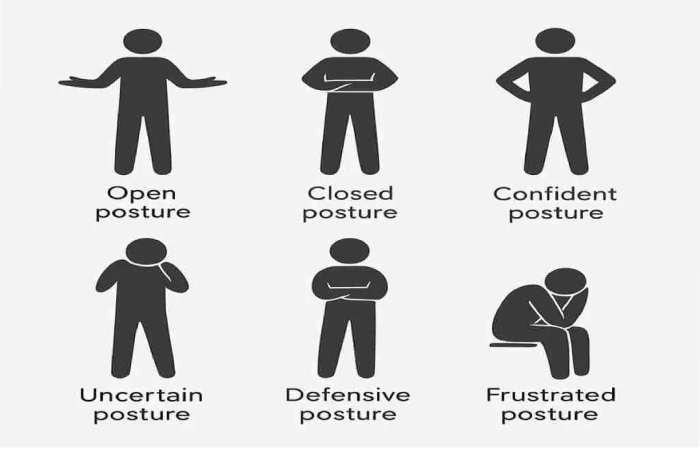
7. Take Up Space (But Not Too Much)
Charismatic people are comfortable occupying space.
What science says:
Expansive body language is linked to higher perceived status.
How to apply:
- Keep your arms uncrossed
- Sit or stand with a relaxed, open stance
- Avoid making yourself unnecessarily small
Why it works:
It signals confidence without saying a word.
8. Use Intentional Pauses
Silence can be powerful.
What science says:
Pauses increase perceived authority and give weight to your words.
How to apply:
- Pause before answering questions
- Add brief silence after key points
- Avoid filler words like “um” or “uh”
Why it works:
It makes you appear thoughtful and in control.
9. Align Facial Expressions with Emotions
Inconsistent expressions reduce trust.
What science says:
People quickly detect mismatches between facial expressions and words.
How to apply:
- Match your expression to your message
- Practice emotional awareness
- Avoid a “blank” or disconnected face
Why it works:
Consistency builds credibility and emotional impact.
10. Master the Handshake (or Greeting Gesture)
First impressions happen fast.
What science says:
A confident greeting influences how people judge your competence and likability.
How to apply:
- Use a firm (not crushing) handshake
- Maintain eye contact
- Smile briefly during the greeting
Why it works:
It sets the tone for the entire interaction.
11. Reduce Self-Touching Behaviors
Nervous habits can undermine your presence.
What science says:
Frequent face-touching or fidgeting signals anxiety or discomfort.
How to apply:
- Avoid touching your face, neck, or hair repeatedly
- Keep hands relaxed and purposeful
- Practice stillness
Why it works:
It makes you appear calm and composed.
12. Lean In to Show Engagement
Your body should show interest, not just your words.
What science says:
Leaning slightly forward signals attention and involvement.
How to apply:
- Lean in when someone is speaking
- Nod occasionally to show understanding
- Avoid leaning back too much during conversations
Why it works:
It makes others feel heard and valued.
Virtual and Introvert Adaptations
Zoom: Exaggerate nods, upper body open; green screen hides fidgeting. Introverts: Subtle leans, quality eye contact over volume.
Common Mistakes and Fixes
Fidgeting: Clasp hands. Blank face: Practice mirror smiles. Too much space: Close gap gradually.
Practice Drills and Self-Assessment
Daily: Record talks, score cues. Quiz:
| Cue | Yes/No | Notes |
| Open Posture |
30-day: One cue/day.
The Different Types of Charisma
| Type | Key Traits | Best Contexts | Famous Examples |
| Focus | Intense listening, eye contact, presence | One-on-one, mentoring | Oprah Winfrey, Bill Clinton |
| Visionary | Passionate vision, storytelling, conviction | Innovation, rallies | Steve Jobs, Elon Musk |
| Kindness/Warmth | Empathy, smiles, optimism, inclusivity | Teams, service roles | Betty White, Mother Teresa |
| Authority | Power poses, decisiveness, dominance | Crises, leadership | Winston Churchill, Margaret Thatcher |
| Humor | Wit, self-deprecation, playfulness | Presentations, networking | Robin Williams, Barack Obama |
3 Essential Components of Charisma
3 Essential Components of Charisma (from Yale/Princeton research):
- Presence – Full attention makes others feel valued (active listening, eye contact)
- Power – Demonstrated competence/confidence (posture, decisiveness)
- Warmth – Genuine caring/approachability (smiles, empathy, leaning in)
Formula: Presence × (Power + Warmth) = Charisma. Missing any collapses the effect.
What part of the brain controls charisma?
No single brain region “controls” charisma it’s a network effect involving emotional, social, and reward systems.
Key Brain Areas Linked to Charisma
Color-coded brain regions diagram
Mirror Neurons (premotor cortex, inferior parietal lobule): Fire when mimicking charismatic gestures/posture, creating rapport and “emotional contagion.”
Prefrontal Cortex (PFC): Left PFC drives approach motivation and social cognition; balanced left-right activation occurs viewing charismatic leaders.
Limbic System (amygdala, insula): Processes warmth/emotion reading; triggers oxytocin for trust.
Reward Circuit (nucleus accumbens, dopamine pathways): Charisma sparks dopamine release, making people crave more interaction.
Frontal Asymmetry: Charismatic displays equalize alpha waves across hemispheres (approach = avoidance balance).
FAQ Section
What body language instantly boosts charisma?
Power poses and open postures raise confidence hormones 20-25%.
How long for eye contact in body language for charisma?
3-5s then triangle shift (eye-eye-nose).
Gestures for charismatic body language?
Power sphere (waist-eyes); boosts recall 34%.
Body language for charisma on Zoom?
Exaggerate leans/nods, front camera fully.
Power poses duration for charisma?
2 minutes pre-event.
Avoid what body language kills charisma?
Crossed arms, slouch, fidgeting.
Body language for charisma introverts?
Subtle mirroring, head tilts.
Final Thought
You don’t need to change who you are to become more charismatic. You just need to become more aware of how you show up physically. Small adjustments in posture, movement, and expression can completely transform how others perceive you.